


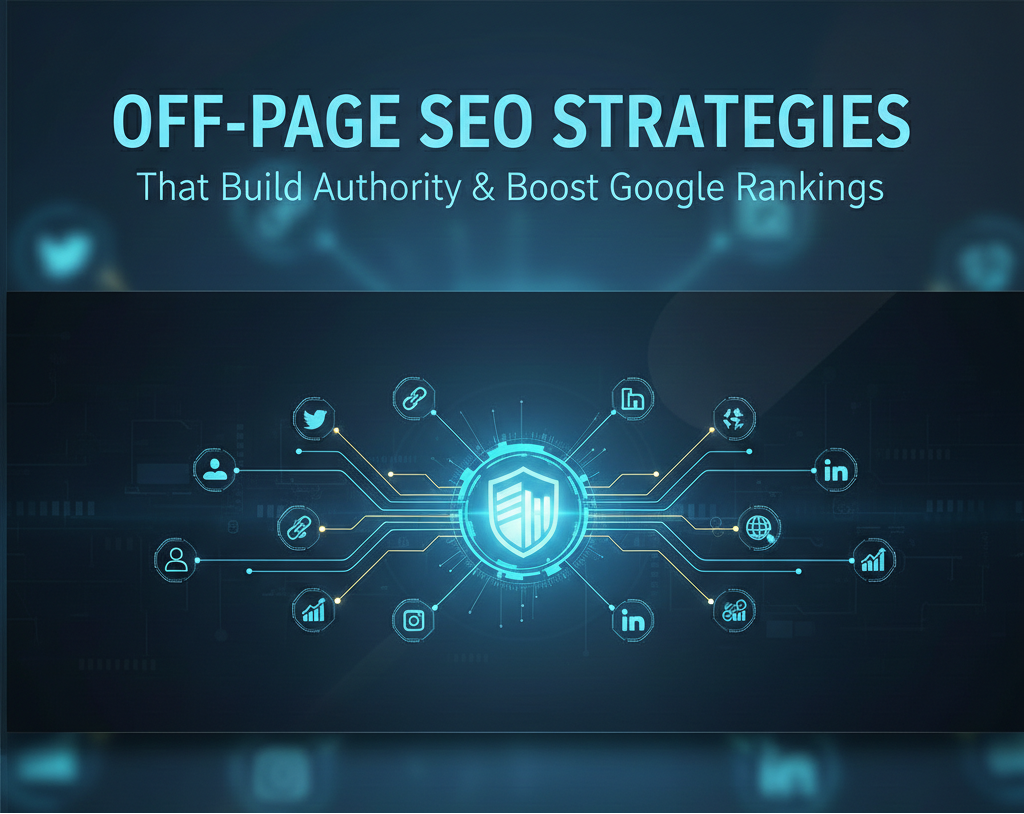
Now-a-day’s SEO world is broader than your own site. Ranking success depends not just on what’s on your pages but how credible your brand appears across the web. That’s where off-page SEO comes in. It is everything happening outside your website that signals relevance, authority, and trust to Google and other search engines. While backlinks remain a major part of the picture, off-page SEO also includes brand mentions, digital PR, partnerships, and online reputation. Together these signals help search engines view your brand as reputable, influential, and trustworthy.
In 2026, off-page SEO has matured. Search engines use sophisticated systems to evaluate external signals beyond simple link counts. They assess the relevance of linking sites, the context of mentions, and real-world authority. When done right, off-page SEO helps your content earn better rankings, increases referral traffic, and amplifies brand visibility. Below, we break down the key building blocks of off-page optimization and explain why quality always beats shortcuts.
Authority Signals That Influence SEO
Strong authority signals tell search engines that your brand deserves visibility in competitive searches. The main components are backlinks, brand mentions, and digital PR.
- Backlinks remain foundational. When other reputable sites link to your pages, they pass relevance and authority signals that help search engines understand how valuable your content is. But not all links are equal. Links from authoritative, topic-relevant sources carry more weight than links from low-quality or unrelated sites.
- Brand mentions without direct links also matter. Search engines increasingly interpret mentions of your business name, products, or services on reputable platforms as evidence of real-world credibility. These mentions strengthen your brand footprint even when links are absent.
- Digital PR connects off-page SEO with media exposure. Featuring in online news, industry blogs, expert roundups, and interviews elevates your brand’s authority. It amplifies your presence across channels that search engines trust.
High-Quality Links vs Spam Links
Not all backlinks help your rankings. In fact, low-quality or spam links can harm your SEO efforts.
- High-quality links come from reputable, relevant sites that naturally reference your content. These links are earned through valuable resources, expert insights, collaborations, or compelling storytelling. They align with your niche and signal trust.
- Spam links are low value or manipulative. Paid links from link farms, excessive blog comments, or irrelevant directory submissions can trigger algorithmic filters and penalties. Search engines today evaluate link context, site quality, and link intent. Spammy links waste effort and can drag down performance.
Focusing on quality over quantity protects your SEO and builds lasting authority signals that algorithms respect.
The Role of Trust and Domain Authority
Off-page SEO directly influences trust and domain authority metrics. Trust is how confidently search engines believe a brand is legitimate, reliable, and aligned with user needs. Domain authority reflects cumulative credibility signals from backlinks, mentions, and historical performance.
When trusted sites link to your content, domain authority increases. When authoritative publications feature your brand, your reputation grows. Algorithms evaluate these patterns over time. Consistent, high-quality external signals reduce the risk of volatility when ranking shifts occur.
Strong trust signals also impact click-through rates. Users are more likely to click search results from recognizable, reputable brands. That in turn generates engagement data that reinforces relevance to search engines.
Real World Impact on Rankings
Off-page SEO influences rankings in several measurable ways:
- Improved visibility in competitive keyword landscapes. Authority signals help pages outrank competitors even if on-page differences are subtle.
- Higher referral traffic. Backlinks and mentions from trusted sources send quality visitors who are more likely to engage and convert.
- Enhanced brand recognition. Broad exposure across industry sites, social media, and media platforms increases trust among users and search engines alike.
- Reduced dependence on paid channels. Strong organic authority decreases the need for ongoing ad spend to maintain visibility.
These impacts reinforce each other. Better rankings bring more visibility. More visibility draws authority signals. Over time, this cycle builds sustainable organic growth.
Strategic White-Hat Off-Page SEO Approach
Sustainable growth comes from a strategic, white hat off-page SEO approach built on relevance and credibility. Instead of chasing shortcuts, focus on earning high quality backlinks through valuable content, industry relationships, and consistent digital PR. Strengthen brand mentions, monitor your backlink profile, and remove harmful links before they affect performance. Authority builds over time through trust, not manipulation. At First 97 Days, the focus stays on long-term reputation and measurable impact. If you want rankings supported by real authority, a structured off-page strategy is where lasting visibility begins.
